STEP ONE
Ask, then sketch
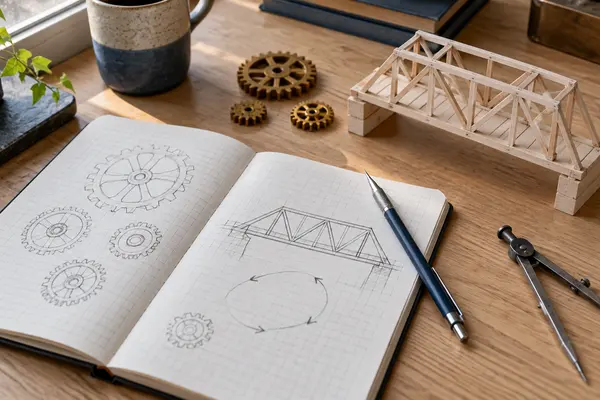
Start with the goal and its limits, then draw several rough ideas before falling for one.
See the full loop doodleengineer
HOW ENGINEERS THINK
Every bridge, aircraft and gadget started as a rough idea on paper.
Walk the design loop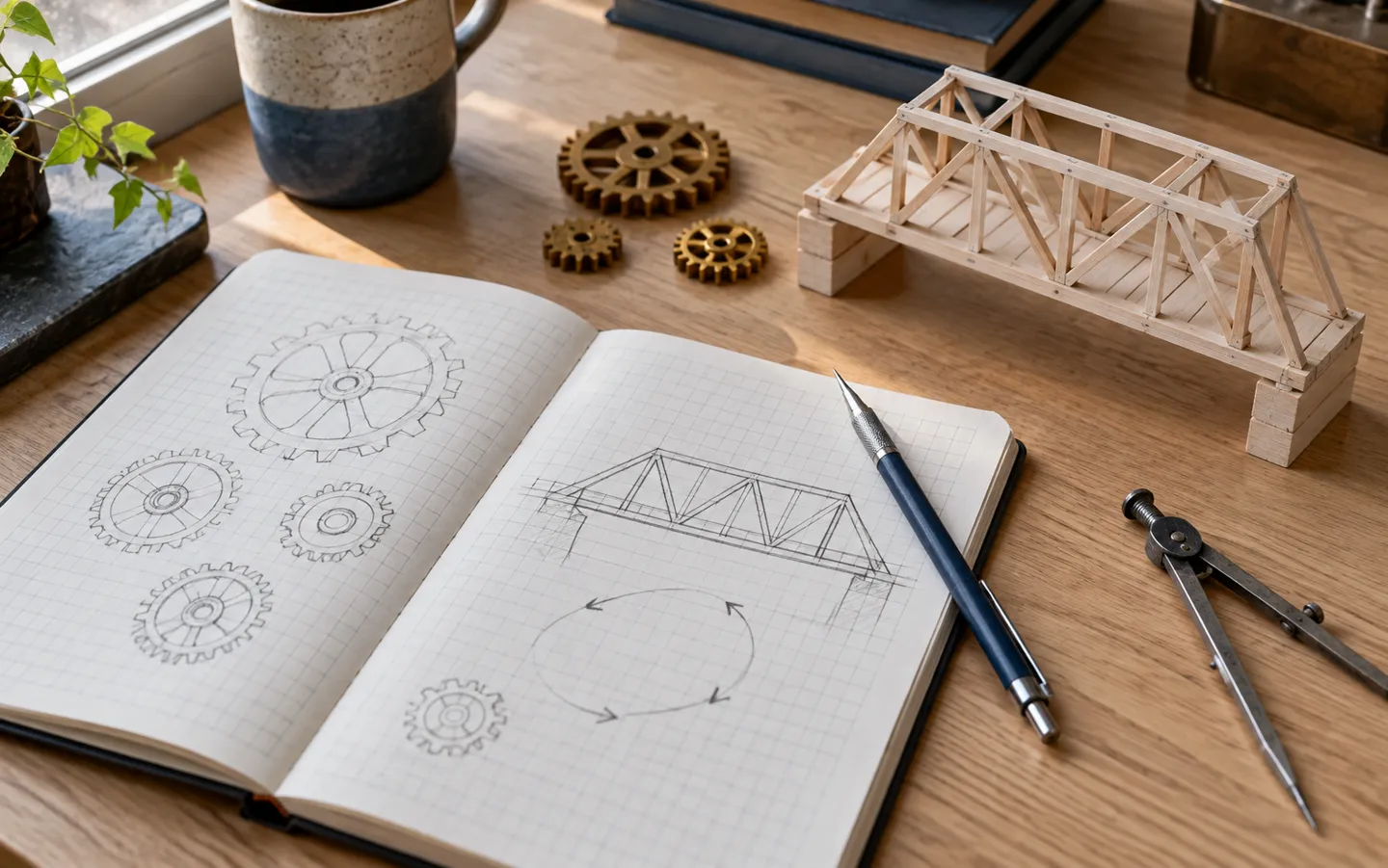
PROTOTYPEthen improve
Engineering is less about genius than about a loop: ask the right question, draw some ideas, build a cheap model, break it, and improve it. Here is that loop in plain English, with the famous successes and failures that shaped it.
Plain English, with the sources linked.
Updated
THE SHORT ANSWER
Engineers rarely get it right first time.
They plan for that by testing early and cheaply.
STEP ONE
Start with the goal and its limits, then draw several rough ideas before falling for one.
See the full loopTEST EARLY
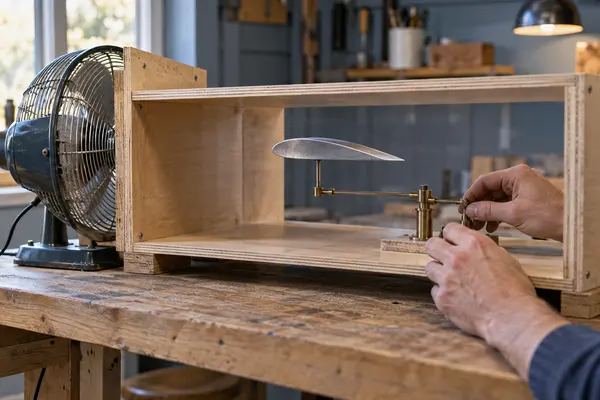
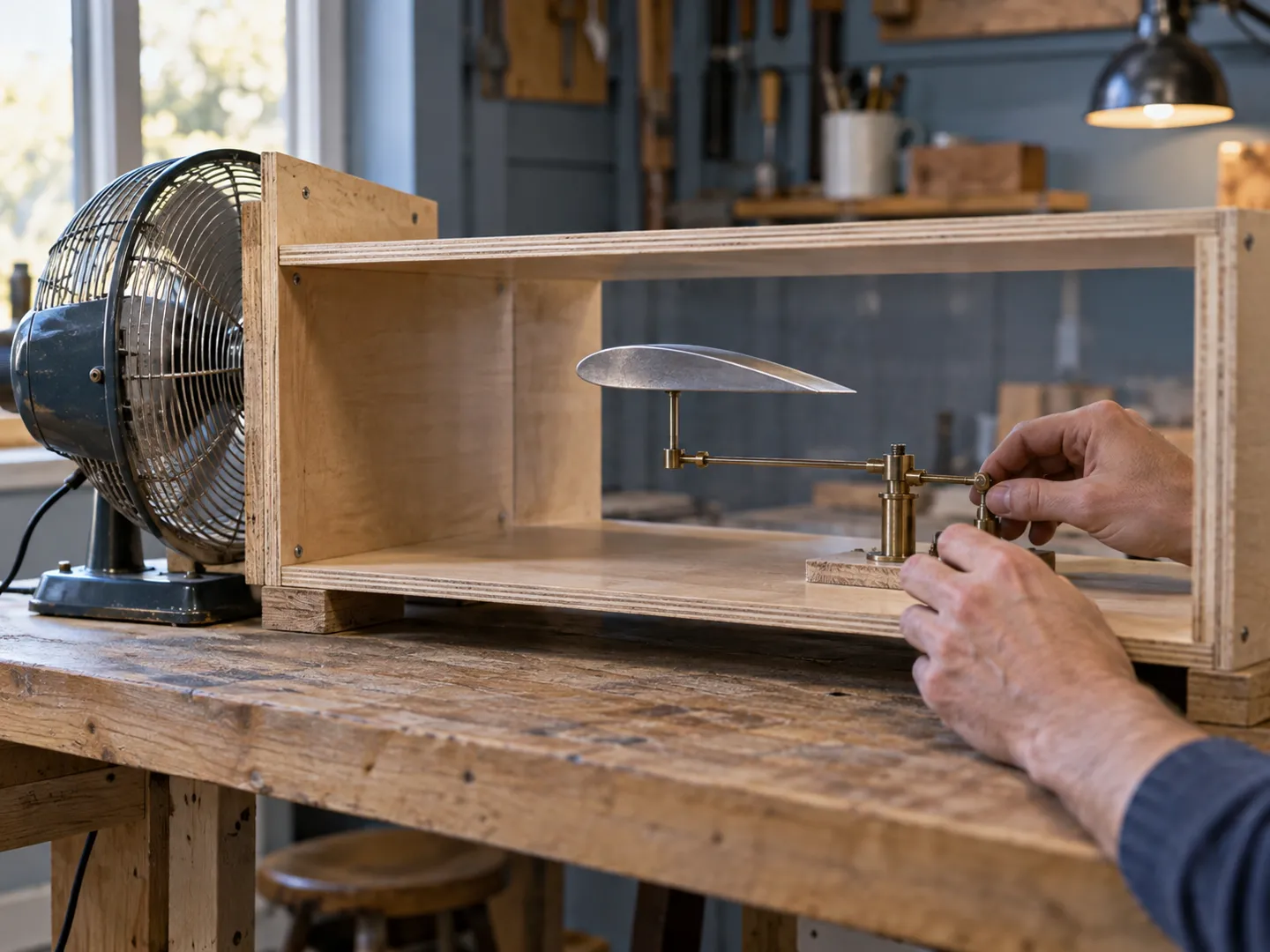
A small model is a cheap place to fail. The Wright brothers proved it with a home-made wind tunnel.
See the experimentLEARN FROM FAILURE
A bridge that twisted apart and a lost Mars probe changed how engineers check their work.
Read the lessonsTHE DESIGN LOOP
Pick a step to see what it means. The wording comes from NASA’s engineering design process, as taught in its BEST guides for schools.
The steps are a loop, not a ladder. After improving a design, engineers usually go back to asking, imagining and testing again.
TWO STORIES WORTH KNOWING
One team tested everything on a bench.
Another missed a mismatch between two pieces of software.
38 wings
Model wings, each tried at 45 angles
From 22 November 1901 the Wright brothers ran formal tests in a home-made wind tunnel with a 16-inch square test section. They had already tried about 200 wing shapes just to check the tunnel worked.
TEST EARLY · 1901
× 4.45
Pound-seconds read as newton-seconds
NASA found that a ground software file for the Mars Climate Orbiter used imperial units where metric was required. The thruster effects were underestimated by a factor of 4.45, and the orbiter was lost on 23 September 1999.
CHECK THE INTERFACES · 1999
Both stories turn on the same habit: test each part and each hand-over between parts, because a design is only as good as the checks behind it.
TRY IT AT HOME
Before solving anything, write one sentence on what the thing must do and one on what limits it, such as size, budget or time.
Doodle at least three different approaches before picking one. The second or third is often better than the first.
Card, tape, balsa or a quick mock-up is enough. Test it, note what failed, and change one thing at a time.
Write the unit next to every number you measure or pass on, so nobody has to guess whether it is inches or millimetres.
LESSONS FROM HISTORY
NASA’s school version of the engineering design process puts it plainly: “Plan out a design and draw your ideas.” The sketch comes before the build.
On 17 December 1903 the Wright Flyer’s first flight lasted 12 seconds and covered 120 feet (about 37 m). The longest of four flights that day reached 852 feet in 59 seconds.
The Tacoma Narrows Bridge, then the world’s third-largest suspension bridge, opened on 1 July 1940. It twisted apart in a 40 mph wind on 7 November 1940.
After the collapse, the review board recommended wind tunnel tests on models. Today US bridges built with federal funds must have a 3D model analysed in a wind tunnel during preliminary design.
The Mars Climate Orbiter reached Mars about 170 km lower than planned because one piece of software worked in pound-seconds and another expected newton-seconds.

QUICK QUESTIONS
Short answers to the questions people ask most.
It is a loop for solving problems. NASA teaches it in six steps for schools: ask a question about the goal, imagine a possible solution, plan a design and draw your ideas, create a working model, experiment and test it, then improve it and go round again.
Because a model is a cheap place to fail. In 1901 the Wright brothers built a small wind tunnel and tested 38 model wings at 45 angles each. Two years later, on 17 December 1903, their Flyer made its first powered flight.
It opened on 1 July 1940 and fell in a 40 mph wind on 7 November 1940. The review board named excessive flexibility as the main cause and called for a better understanding of aerodynamics, which led to wind tunnel testing of bridge designs.
NASA’s investigation found that ground software for the Mars Climate Orbiter reported thruster impulse in pound-seconds instead of newton-seconds, a factor of 4.45. The orbiter arrived about 170 km lower than planned and was lost on 23 September 1999.
No. A design sketch is a thinking tool, not artwork. Boxes, arrows and rough shapes are enough to show how parts fit and where a plan has gaps, which is why drawing your ideas sits in the plan step of NASA’s design process.
A NAME WITH A PLAN
doodleengineer.com is part of the DoodleSale portfolio. It isn't in an auction right now, but you can ask about leasing it.